ご要望またはご協力できることがございましたらお気軽にお問い合わせください
一般的なお問い合わせと所在地情報
お問い合わせ


 Control-M + Amazon SQS
あなたのAmazon SQSワークフローは、メッセージ送信ジョブが実行される前から始まります—何か上流で壊れると失敗する可能性があります。Amazon S3オブジェクトが到着しない。AWS Lambda変換が遅れて終了します。Control-Mは、S3オブジェクトの到着、Lambda変換、SQSメッセージ送信、ECS消費者処理の全チェーンを調整します。
一般的なワークフローの問題
これがあなたの週のように聞こえますか?
これらは特殊なケースではありません。これらは、複数のツールでAmazon SQSワークフローを実行しているチームの通常の運用条件です。Control-Mがそれぞれをどのように処理するかをご覧ください。
UPSTREAM FAILURE
あなたのLambdaは失敗しました。SQSメッセージは送信されるべきではありません。
Control-M detects the upstream job state and prevents the dependent Amazon SQS job from executing. The message is sent only after required workflow conditions succeed, keeping downstream consumers from acting on incomplete or failed processing.
LATE DEPENDENCY
02:00のS3配信が遅れています。あなたのキューのワークフローが待機しています。
Control-M tracks the upstream dependency instead of relying on a fixed cron window. The Amazon SQS job waits for the required workflow condition, while SLA monitoring gives operations teams visibility into delay and downstream business impact.
FIFO ORDERING
あなたのFIFOワークフローには、正しいメッセージグループと重複排除IDが必要です。
Control-M Amazon SQS jobs support FIFO queue parameters including Message Group ID and Message Deduplication ID. Teams can define these alongside the message body and attributes while coordinating the send with the surrounding production workflow.
CROSS-ACCOUNT ACCESS
ターゲットキューは別のAWSアカウントにあります。認証情報がブロッカーになります。
Control-M supports AWS Assume Role authentication for cross-account access, alongside AWS IAM Role and access key authentication. Centralized connection profiles separate authorization details from job definitions, simplifying secure execution across AWS account boundaries.
SLA RISK
メッセージは送信されました。エンドツーエンドのワークフローはまだ遅れています。
Control-M monitors the Amazon SQS job alongside upstream and downstream jobs and can attach an SLA job to the workflow. Teams see status, results, output, dependencies, and schedule risk without treating the queue operation as an isolated event.
統合事実
Control-M + Amazon SQS
|
API and automation capabilities |
Control-M Automation API · Amazon SQS job definitions · preset message sending · manual JSON message structures · Standard queues · FIFO queues · message attributes · variables |
|
Deployment models & infrastructure flexibility |
Control-M SaaS · self-managed Control-M · Control-M Web · Automation API · Linux Agent · Windows Agent · regional Amazon SQS endpoints |
|
Security posture |
centralized connection profiles · AWS Key & Secret · AWS IAM Role · AWS Assume Role · cross-account authentication · external vault integration · IAM-based AWS access |
|
Incident response & MTTR enablement |
job status monitoring · results and output monitoring · complex dependencies · downstream execution control · SLA jobs · advanced scheduling criteria · resource pools · lock resources |
エンドツーエンドのオーケストレーション
1つのプロダクションワークフロー。スタック内のすべてのツール。
Control-Mは、Amazon SQS、Amazon S3、AWS Lambda、AWS Step Functions、Amazon ECS、およびクラウドサービス全体にわたるワークフローを、依存関係の追跡、SLAの可視性、すべての自動回復機能を持つ単一のジョブフローで調整します。
- ツール間の依存関係: S3到着 → Lambda変換 → Amazon SQSメッセージ → ECS処理
- データ対応トリガー: ファイル到着、APIイベント、上流ジョブ完了、アプリケーション結果
|
Amazon SQS |
message sending · Standard queues · FIFO queues · message attributes · job monitoring |
|
Amazon S3 |
object workflows · upstream dependencies · downstream triggering |
|
AWS Lambda |
function execution · dependency coordination · status monitoring |
|
AWS Step Functions |
state machine execution · workflow dependencies · status monitoring |
|
Amazon ECS |
container workload execution · dependency coordination · scheduling |
|
Control-M |
scheduling · cross-tool dependencies · SLA management · monitoring · recovery |
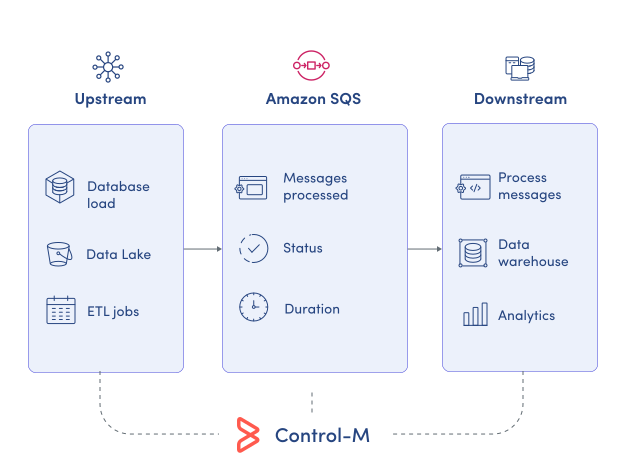
ワークフローを監視する
ワークフローコンテキスト内のAmazon SQSジョブを見る
Amazon SQSはキュー単位のサービス可視性を提供しますが、SQS操作はより大きなプロダクションプロセスの1ステップに過ぎません。Control-Mは、その実行をそれ以前およびそれ以後に実行されるジョブと同じ運用ビューに持ち込みます:
-
Amazon SQSジョブステータス
-
ジョブ結果と出力
-
上流および下流の依存関係
-
エンドツーエンドのワークフロー可視性
-
SLAステータスとリスク
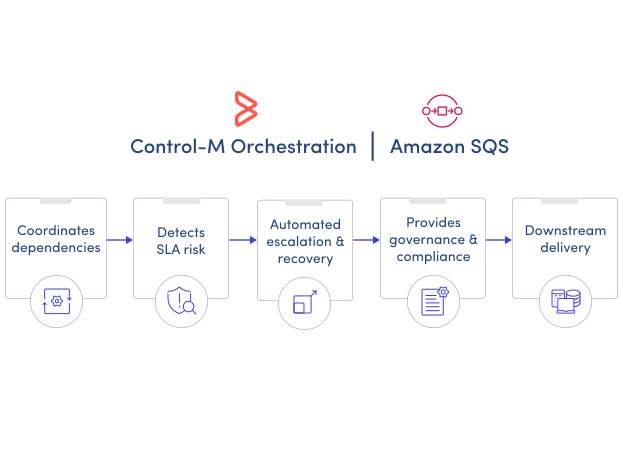
SLA保証
Amazon SQS送信を超えたSLAを管理する
メッセージ送信が成功したからといって、ビジネスワークフローが時間通りに完了したことを証明するわけではありません。Control-Mは、Amazon SQSの実行をプロセス全体のSLAに接続し、チームが上流の遅延を特定し、期限を過ぎる前に依存するジョブを調整できるようにします:
-
SLAジョブを添付する
-
クロスサービスの依存関係を追跡する
-
下流の実行を制御する
-
ジョブ結果を監視する
-
障害回復を調整する
Documentation
複雑なワークフローに秩序をもたらす
Control-Mがチームにより大きな可視性、調整、制御で複雑なプロセスをオーケストレーションする方法を学びます。
