ご要望またはご協力できることがございましたらお気軽にお問い合わせください
一般的なお問い合わせと所在地情報
お問い合わせ


接続されたエンタープライズ
SAPと非SAPワークフローをオーケストレーションして、より接続されたエンタープライズを実現する
組織はSAP S/4HANAに投資してビジネスプロセスを近代化し、より広範なAIの採用に備えています。しかし、S/4HANAの移行を完了することは成功を保証するものではありません。真の課題は、投資が望むビジネス成果を提供することを保証することです。
成功は、SAPの周りのワークフロー、データフィード、バッチジョブ、プロセス依存関係が期待通りに機能することに依存しています。この実行レイヤーでは、移行リスクに最も直面することがあります。
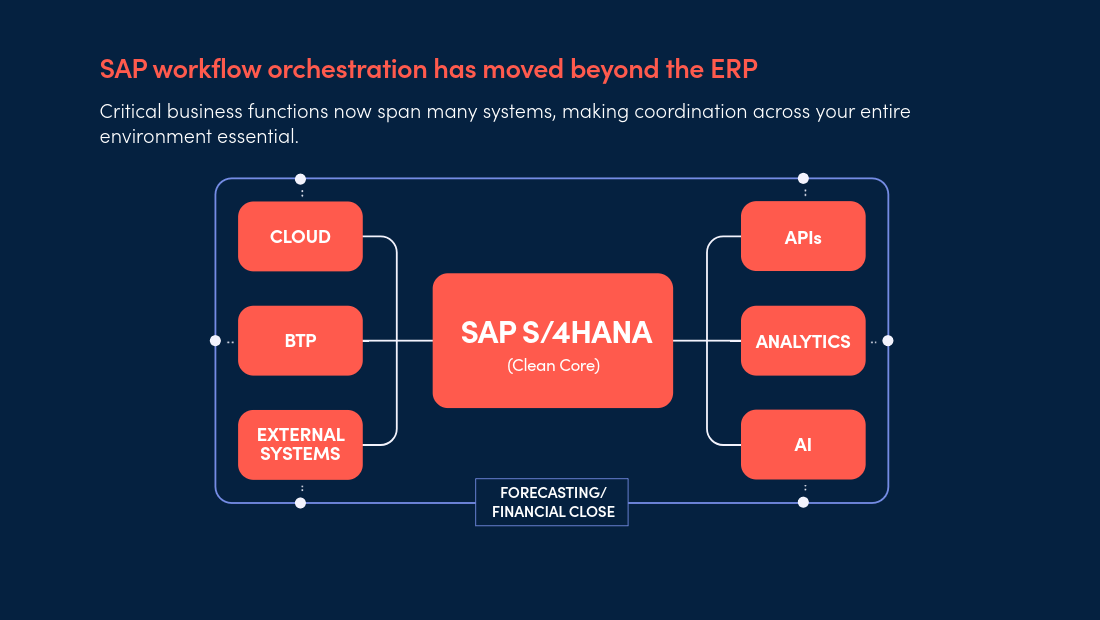
これまで、SAP環境は比較的集中化されており、ワークフローやビジネスプロセスは企業リソース計画(ERP)内に含まれていました。今日では、ビジネスの実行は、ERPコアを超えて機能するクラウドサービス、外部アプリケーション、データプラットフォーム、AIワークフローに依存しています。
クリーンコア戦略は、SAPの外部により多くの実行責任を移すことでこのシフトを加速します。それらのシステムや依存関係がガバナンスを欠いている場合、遅延した収益認識や混乱したサプライチェーンなどのリスクに直面する可能性があります。
SAPの最適化を計画中、移行中、またはすでにS/4HANAで稼働している場合は、次の質問をする必要があります:私たちのERPの周りは、私たちが構築したものを保護するのに十分に管理されていますか?
その質問に「はい」と答えることは、重要な機会があることを意味します。今日のデータが豊富でAI駆動の環境では、SAPワークフローのオーケストレーションが重要です。システム、データ、インフラストラクチャ全体でビジネスワークフローを接続し、調整することで、作業が組織内をどのように流れるかの明確なビューを得ることができます。その可視性は、意思決定を改善し、ビジネス成果を加速するのに役立ちます。
なぜSAPの投資から最も多くのリターンを得ている組織が、ERPの内部だけでなく周囲のすべてを管理しているのかを学ぶために読み続けてください。
重要なポイント:
SAP S/4HANAへの移行は、旅の一部に過ぎません。実際のビジネス価値は、ERPを超えて機能するワークフロー、データ、システムを管理することに依存します。
ISGの調査によると、SAPの移行の約60%が予算を超過し、スケジュールに遅れています1。すでに構築したものを保護することは、移行の周囲で起こることから始まります。
課題
クリーンコアオーケストレーションの課題
クリーンコア戦略を追求している場合、SAP S/4HANA内のカスタマイズを減らし、ERPをできるだけ標準化したいと考えています。これにより、カスタムコードを作成する必要がなくなるため、アップグレードが簡素化され、テクノロジーの採用が迅速になります。
しかし、トレードオフがあります。受注から現金、予測、サプライチェーンの調整などの重要なビジネス機能は、SAPと非SAPシステムの両方が連携して機能することに依存することがよくあります。クリーンコア戦略がSAP内部のカスタマイズを減少させるにつれて、接続されたシステム全体でより多くのプロセス調整が必要になります。これらのシステムには、SAP Business Data Cloud、Snowflake、Databricksなどのデータプラットフォーム、クラウドサービス、AI駆動のアプリケーションが含まれる場合があります。クリーンコアオーケストレーションは、これらの依存関係全体で可視性と制御を維持するためにますます重要になります。
オーケストレーションがなければ、ビジネスが依存するプロセスは断片化する可能性があります。たとえば、在庫や注文データをエクスポートする夜間のSAPバッチジョブが遅れて終了した場合、下流の予測システムは不完全な入力を使用する可能性があります。これにより、SAP自体は正常に動作しているにもかかわらず、計画チームが古い需要シグナルをもとに作業する原因となります。効果的なSAPと非SAPのオーケストレーションは、これらの依存関係が期待どおりに機能し続けることを保証するのに役立ちます。
重要なポイント:
クリーンコアはSAPを簡素化しますが、ERPの外でのオーケストレーションの複雑さを増加させます。効果的なSAPワークフローオーケストレーションは、接続されたシステムが一緒に運用することに依存します。
ケーススタディ

REWEデジタル:SAP最適化中にビジネス継続性を維持する
REWEデジタルは、ヨーロッパ最大の小売および観光会社の1つにITシステムを提供しています。SAP最適化努力を支援するために、同社はメインフレームからSAPアプリケーションを移行し、ハイブリッド環境を採用しました。Control-Mは、複数の技術にわたるワークフローをオーケストレーションし、REWEデジタルが移行中に7,500以上の店舗と250の流通センターで信頼性のあるオペレーションを維持するのを支援しました。
影響:
- 生産での稼働率100%3
- 7,500以上の店舗への信頼性の高い製品配送3
- サプライチェーンワークフロー全体のエンドツーエンドの可視性

「Control-Mへの完璧な移行の後、私たちは未来に向かって進み、新しい技術を堅固なアプリケーションおよびデータワークフローオーケストレーション環境に統合しています。」
フランク・ロートマン | シニアプロダクトオーナー, REWEデジタル
なぜAIが重要性を高めるのか
なぜAIがSAPワークフローオーケストレーションの必要性を高めるのか
組織は、SAP環境にAIアシスタント、エージェント、自律ワークフローを急速に追加しています。SAP JouleやSAP Business Technology Platform (BTP)のAIエージェントなどのソリューションは、タスクを自動化し、ビジネスプロセスを加速することができます。しかし、これらのテクノロジーがより多くのワークフローに組み込まれるにつれて、ガバナンスが難しくなります。
この問題は、クリーンコア環境ではさらに複雑になります。機能がERPを超えて移動するにつれて、AIエージェントはSAPが管理しないシステム全体でアクションをトリガーする可能性があります。オーケストレーションがなければ、失敗はビジネスにとって重要なプロセスに影響を与えるまで気づかれない可能性があります。
監視を維持するには、AIエージェント、データ、ビジネスプロセス全体でのオーケストレーションが必要です。これにより、AIがビジネスの価値を提供し、採用が進むにつれて複雑性を増すことがなくなります。
自律型企業に向かうにつれて、方向を設定する人々と、すべてのステップでガバナンスされたAIが実行する企業が必要です。エージェントオーケストレーションは重要になります。効果的なSAPと非SAPのオーケストレーションは、エージェントが信頼できる方法で機能し、SLAの施行、監査証跡、復旧が組み込まれます。
重要なポイント:
AIは実行を加速することができますが、エージェント、データ、ワークフローが連携して動作する場合にのみそうなります。
"すべての業界でAIが加速し、ワークフローがこれまで以上に動的になっています。リードする企業は、今信頼できるオーケストレーション基盤を構築する企業です。"
Abhijit Kakhandiki | デジタルビジネスオートメーションのSVP兼GM、BMC Software
隠れた依存関係の影響を理解する
普遍的なオーケストレーションは、依存関係の完全なビューを提供し、1つのエリアの変更が別のエリアにどのように影響する可能性があるかを確認できるようにします。シミュレーションテストの実行と継続的な監視により、ライブに移行する前に結果を予測し確認するのに役立ちます。
普遍的なオーケストレーションがなければ
未知の影響
普遍的なオーケストレーションがあれば
可視の依存関係と 予測される結果
自律型企業のための基盤を築く
可視性
接続されたワークフロー、依存関係、ビジネスサービスの完全なビュー。
ガバナンス
SAPおよび非SAP環境全体でのエンドツーエンドの監視。
信頼
自信を持って自動化するための埋め込まれたレジリエンスと制御。
重要なポイント:
SAP最適化から最も価値を得る組織は、最初から実行に焦点を当て、後回しのように扱わない組織です。
ケーススタディ

スケールで信頼性の高い小売オペレーションをサポート
1,400以上の店舗と48,000人の従業員を抱えるクープは、スイス最大の小売および卸売企業です。Control-Mは、小売業者が毎日約140,000のSAPジョブを実行するのを支援し、店舗の運営と価格設定の正確性を維持するためのワークロードの単一の管理ポイントを提供します。このプラットフォームは、クープが可視性を向上させ、ビジネスに影響を与える前に潜在的な問題を特定するのにも役立ちます。
ビジネスの成果:
- スタッフの生産性の向上
- オペレーションを中断する前に特定された潜在的な問題
- 急成長をサポートするためのスケーラビリティ
「私たちは、1つのSAPシステムでバッチプロセスを開始し、別のシステムにデータを転送して処理し、処理されたデータを最初のシステムに戻すジョブフローを持っています。Control-Mによる自動化なしでは、このワークロードの複雑さと量を処理することはできませんでした。」
ステファン・コンラッド, ICTシステムスペシャリスト | クープ
なぜControl-Mなのか
なぜSAPと非SAPオーケストレーションにControl-Mを使用するのか?
SAP環境がより分散していくにつれて、オーケストレーションは可視性を維持し、リスクを最小限に抑えるためにますます重要になります。Control-Mがそこで役立ちます。
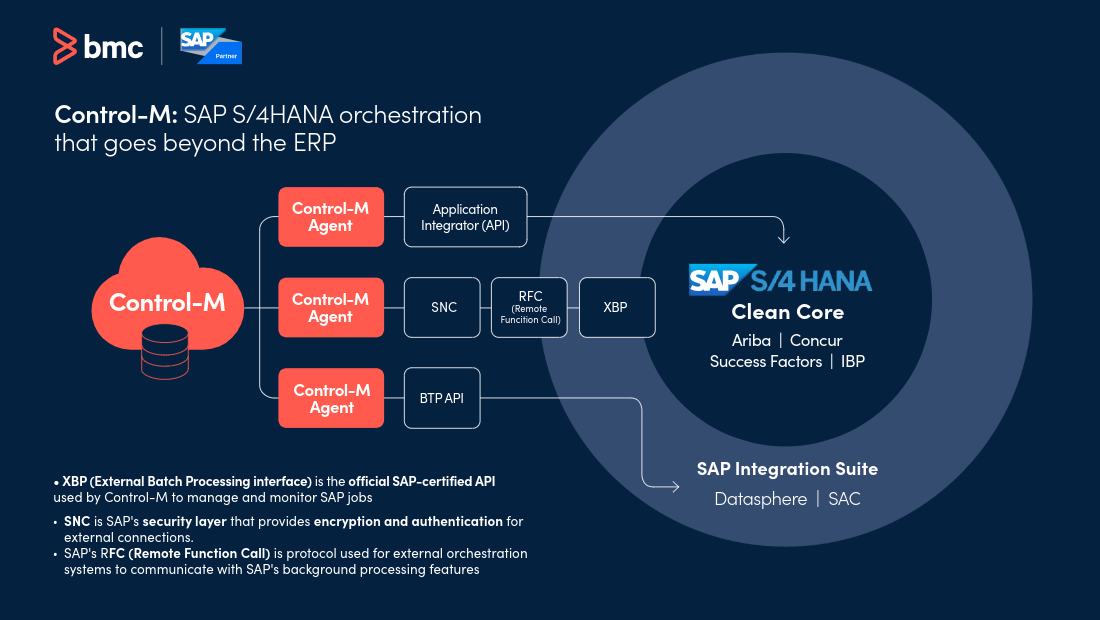
Control-Mは、SAPと非SAPシステム全体でワークロードを自動化するユニバーサルオーケストレーションプラットフォームです。SAP S/4HANAの移行とRISE with SAPをサポートし、ERPを超えて拡張するワークフローをオーケストレーションします。その結果、SAPの移行実行リスクが軽減され、ガバナンスが強化され、重要なビジネスプロセスへの可視性が深まります。Gartnerは2026年8月のGartner® Magic Quadrant™でBMC(Control-M)をリーダーとして名付け、SAPの移行リスクを軽減し、接続されたシステム全体でのガバナンスを強化する同じオーケストレーション機能を認識しています。
ユニバーサルオーケストレーション
単一のコントロールレイヤーからSAP、クラウド、データ、AI環境全体でワークフローをオーケストレーションして、エンドツーエンドのSAPワークロード自動化を実現します。
移行の信頼性
ECCおよびS/4HANAのワークロードを並行してシミュレートして、カットオーバー前に結果を検証し、移行リスクを軽減します。
管理されたAIとエージェントワークフロー
SAPと非SAP環境全体でのAIオーケストレーションとエージェントAIオーケストレーションを有効にし、組み込みのガバナンスを提供します。
SAPワークフローオーケストレーション準備チェックリスト
- S/4HANAまたはRISE with SAPの移行イニシアチブが進行中です。
- AIエージェントまたはAI駆動のワークフローがビジネスプロセスに導入されています。
- 重要なビジネスサービスは、SAPと非SAPの両方のシステムに依存しています。
- ビジネスプロセスは、SAPを超えてクラウド、データ、またはAIプラットフォームに広がっています。
- チームは、ワークフローを監視および管理するために複数のツールを使用しています。
- クロスシステムの依存関係に対する可視性は限られています。
- SLAトラッキングとガバナンスは、複数のツールで管理されています。
- チームは、SAP、データ、クラウド環境全体でのワークフローの失敗をトラブルシューティングするのにかなりの時間を費やしています。
4つ以上のボックスにチェックを入れた場合、SAPワークフローのオーケストレーションに対してより統一されたアプローチを評価する時期かもしれません。
移行がどのように露出しているかを正確に確認してください。個別のリスク要約を行うためにSAP移行準備評価を受けてください。
SAPワークフローオーケストレーション:よくある質問
Control-MはSAP S/4HANAオーケストレーションをどうサポートしますか?

RISE with SAPオーケストレーションで管理が必要なことは何ですか?
SAPクリーンコアオーケストレーションにはどのようなギャップがありますか?
組織がSAP BPAの代替品を選ぶ際に考慮すべきことは何ですか?
SAP AIオーケストレーションはAIエージェントをどのようにサポートしますか?
SAP移行実行リスクとは何か、そしてオーケストレーションはどのようにそれに対処しますか?
Control-MはSAP S/4HANAオーケストレーションをどうサポートしますか?
RISE with SAPオーケストレーションで管理が必要なことは何ですか?
SAPクリーンコアオーケストレーションにはどのようなギャップがありますか?
組織がSAP BPAの代替品を選ぶ際に考慮すべきことは何ですか?
SAP AIオーケストレーションはAIエージェントをどのようにサポートしますか?
SAP移行実行リスクとは何か、そしてオーケストレーションはどのようにそれに対処しますか?
1ISG、SAP移行の現状、2026年。
2BMC、REWEデジタルがControl-Mを使用して食品小売物流のパフォーマンスを最大化、2023年。
3ガートナー® サービスオーケストレーションと自動化プラットフォームに関するマジッククアドラント、2026年。GARTNERは米国および国際的にガートナー社およびその関連会社の登録商標及びサービスマークであり、ここに掲載されています。すべての権利が保護されています。
4SAP、自律型企業、2026年。
5BMC、BMCが新しいControl-M機能で信頼できるAIオーケストレーションを進化させる、2026年。
すべての製品名、ロゴ、ブランドはそれぞれの所有者の財産です。これらの名前の使用は、承認を意味するものではありません。
すべての主張は、2026年8月の時点で私たちの知識の最良の範囲内で正確です。
最新かつ詳細な製品情報については、各ベンダーのサイトを参照してください。これは情報提供の目的のみであり、法的、財務的、または購入に関するアドバイスを構成するものではありません。BMCソフトウェアは、提供された情報の完全性または正確性に関していかなる表明または保証も行いません。